Category Archives: moving, breathing, feeling

rest

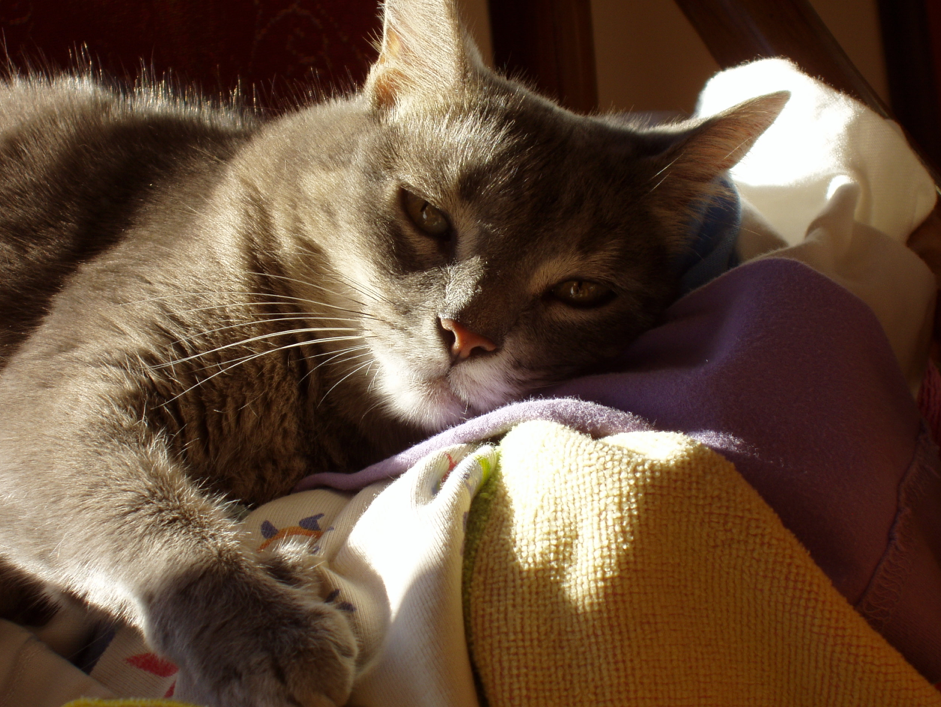
Photo:  Pam White

Sometimes life enforces a big rest.  I have the flu.  I am having a big, unsolicited rest.  But was it unsolicited, or had I managed to tune out sufficiently to invite a collapse instead of a recuperation.

Maybe, but godson Jacob had a very runny nose and perhaps I missed a few hand washes – or got to the soap too late.  In any case, I am down.

But resting doesn’t have to always look like Pachi, above – all grace, softness and light, or me with the tornado sneezes and subterranean cough.  There are the other, more subtle rests.  Those are the ones I want to talk about.

Rudolf Laban, discovered that factory works engaged in repetitive motion labor were less efficient that when small recuperative moments were salted into those repeated movements. Through working specifically with the rhythm of movement in qualitative patterning, their approaches improved efficiency, reduced fatigue, and increased job satisfaction. (Janet Kaylo)  In Laban Movement Analysis, that means looking at not just how much energy is being expended, but what are the specific qualities those movements – quick/sustained, light/strong, direct/indirect, free/bound in their flow.

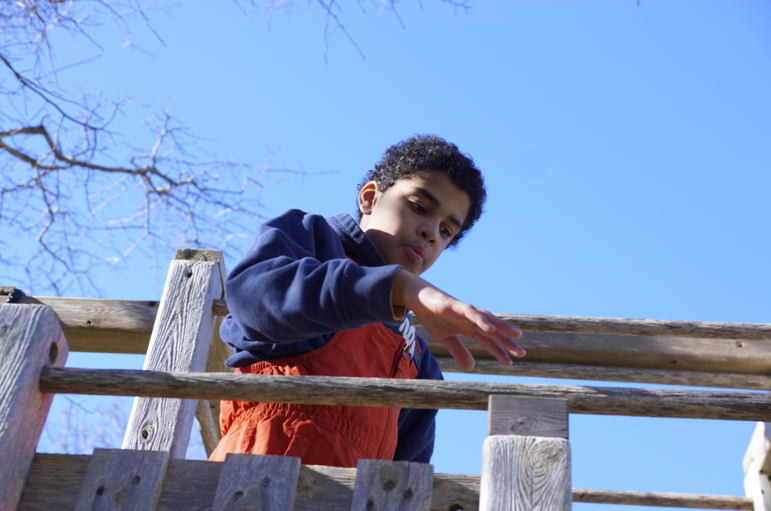
When I was watching JoAnn, Jacob ‘s Mom, I noticed that she used her eyes in a strong, piercing direct way.  She is used to watching Jacob this way – always on guard, always ready.  There is no recuperation and that tension in the eyes makes it way into the whole body.  I invited her to let her vision take in Jacob in a more peripheral, global way and also to intersperse moments of letting her focus meander in a soft and intentional way, instead of being focused, laser-like on Jacob.  Both of those are little recuperations.

Getting up from writing to walk from room to room, or get a glass of water, or step outside and look around – even if only for a few moments – is recuperative.  A breath with attention is a recuperation.  We don’t have to get sick or go to the Caribbean to feel better (although I do enjoy the latter).

Experiment with little recuperations.  Right now I am lying in bed with my cat Ivy snuggled by my right side.  I just took a moment from typing to stroke her and pay attention to how that felt and I feel refreshed.That was less than 10 seconds.

Recuperate and tell me what you discover.
SHARE & EMAIL

the consummate poetry angel

Messenger

My work is loving the world.
Here the sunflowers, there the hummingbird
equal seekers of sweetness.
Here the quickening yeast; there the blue plums.
Here the clam deep in the speckled sand.

Are my boots old? Is my coat torn?
Am I no longer young, and still not half-perfect? Let me
keep my mind on what matters,
which is my work,

which is mostly standing still and learning to be
astonished.
The phoebe, the delphinium.
The sheep in the pasture, and the pasture.
Which is mostly rejoicing, since all the ingredients are here,

which is gratitude, to be given a mind and a heart
and these body-clothes,
a mouth with which to give shouts of joy

to the moth and the wren, to the sleepy dug-up clam,
telling them all, over and over, how it is
that we live forever.

~ Mary Oliver

more patterns

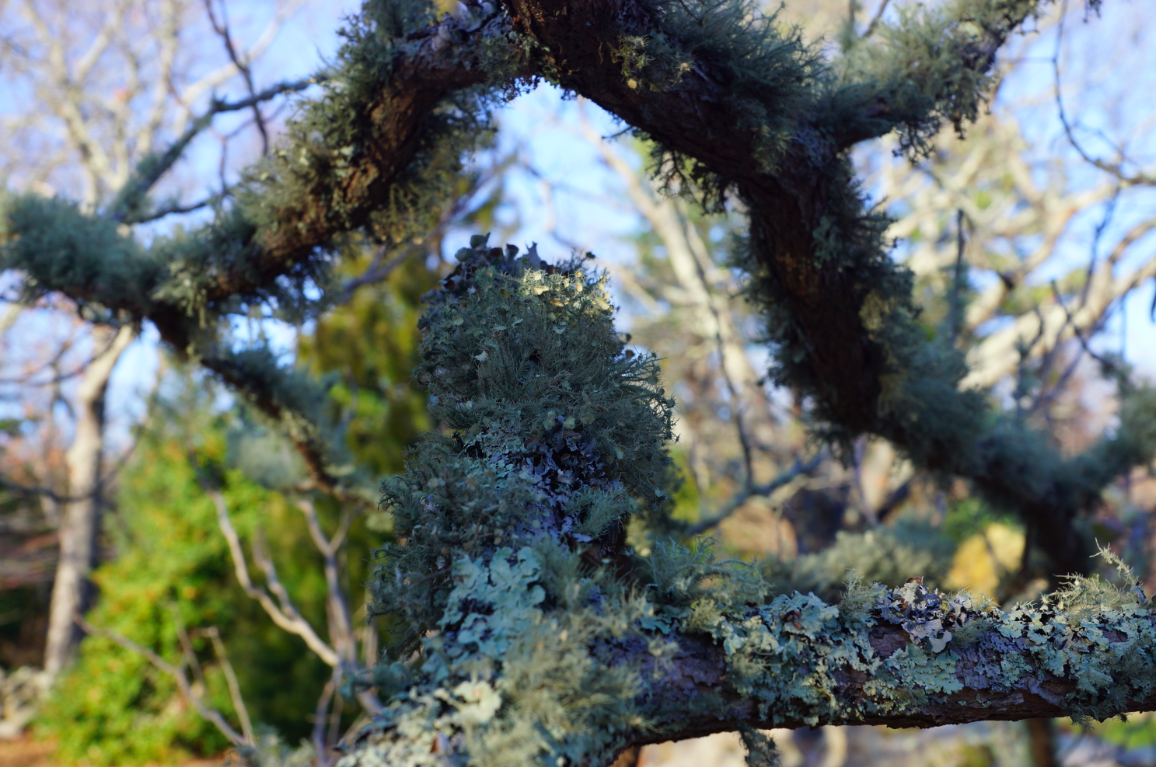
Martha’s Vineyard is the only place I know that grows trees with coats like this.  One of many miracles at the Polly Hill Arboretum.  Patterns of lichen and mosses layered over the patterns of bark and branch.

I traveled to another island today – Manhattan – and on the train from Connecticut read Phoebe Caldwell’s amazing book on autism, Finding Me, Finding You.  What got me was not only the descriptions of hypersensitivities, but the idea that the autistic brain often cannot discard sensory input, so that it builds up in layers upon layer until it is overwhelming and the person has a sensory meltdown, also called fragmentation.

By the time I arrived in the city I felt I had slipped into that slippery, chaotic sensory world of the autist, and by the time I caught the #4 train down to Union Square was completely overwhelmed. The scream of trains, the rivers of people, the clutter of sight and sound felt unendurable. There was no discernable pattern, and the only way I could see to cope was to basically shut down. A lot of people around me seemed to be doing that as well. But we were all coping in essentially socially acceptable ways.  But I wondered, are we all – each of us in our own peculiar way – a little on the spectrum?  What do each of us actually do to cope with the flood of data?

Working with Jacob, I got very interested in rhythms of exertion and recuperation – a concept that originated with Rudolf Laban, the dancer, choreographer and originator of Labanotation and Laban Movement Analysis.  I wanted to see what Jacob’s exertion/recuperation rhythms were, and then got interested in the rhythms of his caregivers as well.  I observed that actually Jacob was better at taking care of his need for recuperation than his primary caregivers, who are on, on, on.

More on exertion and recuperation tomorrow.  I need to rest.


inspiration

Jacob’s mother Jo-Ann shared this work with me during the week I spent with her, Derrill (Jacob’s Daddy) and Jacob on Martha’s Vineyard.  It was revelatory.  Phoebe Caldwell has developed Intensive Interaction, which seems connected to what I was doing with Jacob, but takes it farther, deeper.  Phoebe’s fearlessness, instinct and joy are exquisite to watch.

My sense all week was that I was de-coding Jacob’s language, and that even though it is the language of movement, I could not parse it, except in snippets.  Even though I consider myself a pretty good observer/listener, I was missing a lot.  What I learned watching Phoebe was the quality of pleasure and enthusiasm that she and the other teachers bring to their work.  I was trying too hard, not enjoying Jacob enough, efforting too much.  Anat Baniel talks about enthusiasm as one of the nine essentials of learning. Here is what she says about enthusiasm:

Enthusiasm is self-generated; it is a skill you can develop, choose to do and become good at. Enthusiasm tells your brain what is important to you, amplifying whatever that is, making it stand out, infusing it with energy to grow more. Enthusiasm is a powerful energy that lifts you and inspires you and others. It lights up your brain, helping to usher in changes, transforming the most mundane situation or task, adding meaning and generating delight. Enthusiasm helps make the impossible possible.

Enthusiasm is different from diligence, persistence or even love.  It is the thing that lights up the work, keeps you breathing, that allows a savoring pleasure in the moment.  The other thing that I saw in the videos of Phoebe was the sense of taking time, of waiting, and watching, but staying engaged, but in a softer way than I was experiencing with Jacob.  In mirroring/reflecting him, I sometimes lost my ability to relax and breathe.  Thank you Jacob, for everything you have taught me in the past week!  I can’t wait for more!